The Trident Peptides peptide research blog publishes practical, plain-English guides for people working with research peptides in the laboratory. Articles cover peptide reconstitution and concentration maths, storage and handling, bacteriostatic water, purity testing and documentation, and the chemistry behind the compounds in our peptide shop.
Every guide is written for in-vitro research and general education. Nothing here is medical advice, and none of our products are for human consumption. For chemical identifiers and literature on specific compounds, PubChem is a good free starting point.
What Are Research Peptides? Structure, Synthesis and Research Use
A plain-English guide to research peptides: what they are made of, how solid-phase synthesis works, common modifications and what research use only means.
Peptide Purity Explained: HPLC, Mass Spectrometry and COAs
What a peptide purity figure really measures, how HPLC and mass spectrometry are used, the difference between purity and net peptide content, and what to check on a certificate of analysis.
How to Store Peptides: Temperature, Light and Shelf Life
Why peptides degrade and how to store them before and after reconstitution, with a quick-reference storage table and a lab checklist.
Bacteriostatic Water vs Sterile Water: What Is the Difference?
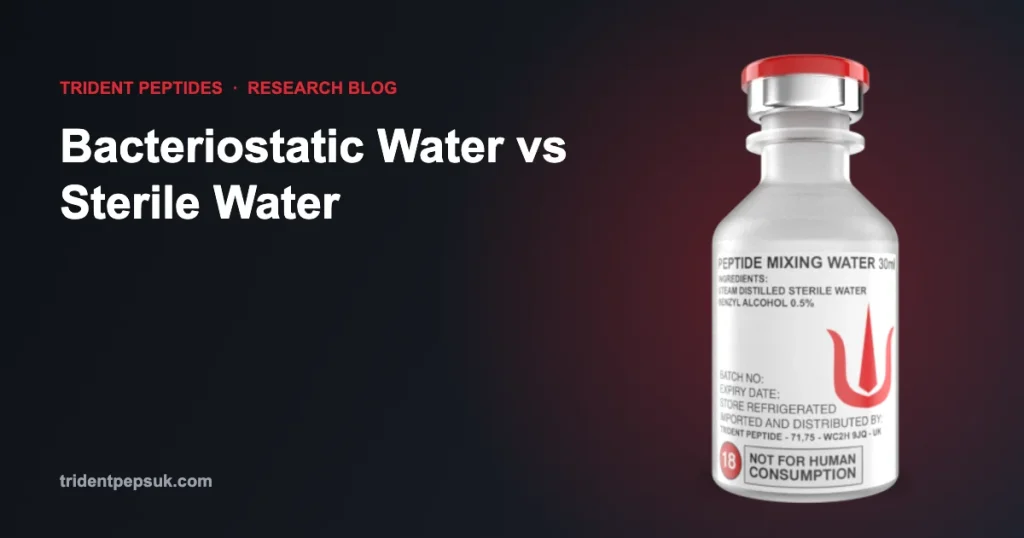
Bacteriostatic water and sterile water look the same but behave differently once opened. Here are the key differences and which one is used for peptide reconstitution.
How to Reconstitute Peptides: A 7-Step Laboratory Guide
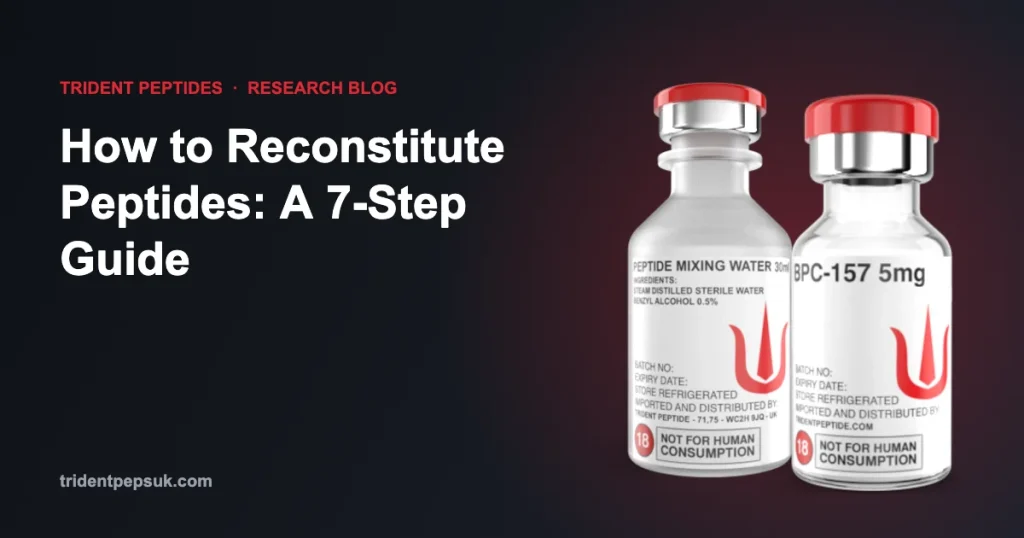
A practical guide to reconstituting research peptides: the equipment you need, how to calculate concentration, a simple 7-step method and the mistakes to avoid.